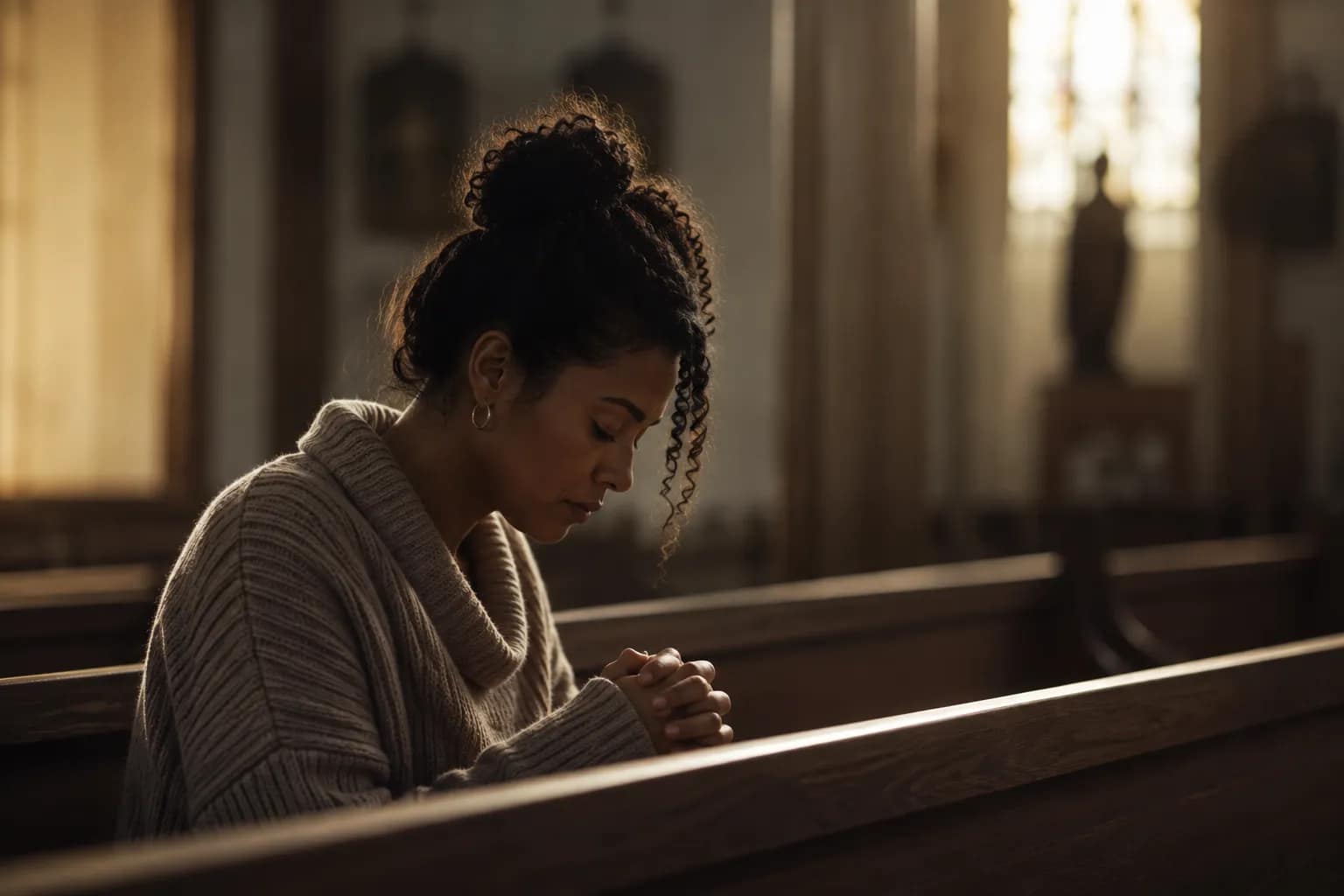
You’ve been hurt by a church. Maybe deeply. Maybe multiple times.

And now you’re at a crossroads: You want to rebuild your faith. You want to come back to Jesus. You might even be ready to try attending church again.
But you’re terrified.
Because the last time you trusted a church, you got wounded. And the thought of walking into another building, sitting in another service, meeting another pastor—it feels like setting yourself up to be hurt all over again.
So the question becomes: How do you find a safe church when you don’t even know what “safe” looks like anymore? How do you protect yourself while still taking the risk of trying again?
That’s what we’re going to talk about today. Not theory. Not ideals. Just practical, honest guidance for finding a church that won’t wound you—or at least one that handles wounds with grace when they happen.
Because here’s the truth: There is no perfect church. Every church is made up of imperfect people, which means every church has the potential to hurt you.
But there are safer churches. Churches where grace is practiced, not just preached. Churches where leadership is humble and accountable. Churches where you can breathe.
Let’s talk about how to find one.
Before You Start Looking: Give Yourself Permission
Before we dive into what to look for, I need to say this: You don’t have to rush this process.
If you’ve been hurt by a church, you need time to heal before you can safely re-engage with a church community. And that’s okay.
Don’t let anyone pressure you with “you can’t grow without community” or “you need to be planted in a local church” or “Hebrews says don’t give up meeting together.”
Those things might be true in the long run. But in the short run, if you’re still bleeding from church wounds, forcing yourself back into a church before you’re ready can do more harm than good.
So give yourself permission to:
- Take your time
- Visit multiple churches without committing
- Walk away if something feels off
- Say “not yet” if you’re not ready
- Prioritize your healing over anyone else’s timeline
You’re not being “weak in faith” by being cautious. You’re being wise. You’re protecting yourself while you heal. That’s healthy.
Red Flags to Watch For
Let’s start with what to avoid. These are red flags that should make you run—not walk—in the other direction.
Red Flag #1: Leadership Operates Without Accountability
If the pastor or leadership team operates like they’re above question, that’s a massive red flag.
Watch for:
- “God called me, so don’t question my decisions”
- No board, elders, or accountability structure
- Pastor makes all financial decisions alone
- Leaders who can’t handle feedback or correction
- “Touch not God’s anointed” language when someone raises concerns
Healthy leadership is humble, open to feedback, and operates under accountability structures. If a church doesn’t have that, keep looking.
Red Flag #2: Control and Manipulation
If a church uses fear, guilt, or shame to control people, leave.
Watch for:
- Threats about what happens if you leave the church
- Pressuring you to give money you don’t have
- Making you feel guilty for having boundaries
- Spiritual language used to manipulate (“God told me you should…”)
- Leaders who isolate you from outside relationships or input
Healthy churches give you freedom. Unhealthy churches take it away.
Red Flag #3: No Space for Questions or Doubt
If you can’t ask honest questions without being seen as “weak in faith” or “rebellious,” that’s not a safe place.
Watch for:
- Shutting down questions with “just have faith”
- Treating doubt as sin
- Labeling curious people as “divisive”
- Expecting total agreement on every secondary issue
- Creating an us-vs-them mentality toward people who think differently
Healthy churches welcome honest questions. They know that faith strong enough to last is faith that’s been tested and questioned.
Red Flag #4: Gossip Is Tolerated
If the church has a culture of gossip—where people talk about each other instead of to each other—it’s not safe.
Watch for:
- Leaders who share confidential information
- Small groups that turn into gossip sessions
- People discussing others’ struggles without their permission
- A culture where “prayer requests” are thinly veiled gossip
Healthy churches protect people’s stories and handle conflict directly, not through whisper campaigns.
Red Flag #5: Grace Is Preached But Judgment Is Practiced
If the sermons talk about grace but the culture reeks of judgment, pay attention to the culture, not the sermons.
Watch for:
- How they talk about people who struggle with sin
- How they treat people going through divorce, addiction, or crisis
- Whether mistakes are met with compassion or condemnation
- If there’s a hierarchy of “acceptable” vs. “unacceptable” sins
Healthy churches extend the same grace to everyone that they claim God extends to them.
Red Flag #6: Your Gut Says Something’s Wrong
Don’t ignore your intuition. If something feels off, it probably is.
You don’t need to be able to articulate exactly what’s wrong. If you walk into a church and your chest tightens, if you feel like you’re walking on eggshells, if you leave feeling worse than when you came—trust that feeling.
Your body is telling you something. Listen to it.
Green Flags: What to Look For
Now let’s talk about what you should look for—the signs that a church might actually be a safe place to heal and grow.
Green Flag #1: Leadership Is Humble and Accountable
Healthy leaders admit when they’re wrong. They’re open about their own struggles. They operate under accountability structures and welcome input.
Look for:
- A leadership team or board (not just one person making all decisions)
- Leaders who share about their own failures and growth
- Pastors who say “I don’t know” or “I was wrong”
- Financial transparency
- A culture where feedback is welcomed, not punished
Green Flag #2: Grace Is More Prominent Than Rules
In a healthy church, you hear more about God’s love and grace than about behavior modification.
Look for:
- Sermons that emphasize what Christ has done, not just what you should do
- A culture where people feel safe being honest about struggles
- Celebration of growth, not condemnation of failure
- More “you are loved” than “you should do better”
This doesn’t mean they ignore sin or never talk about obedience. It means grace is the foundation, not an afterthought.
Green Flag #3: Questions and Doubts Are Welcome
In a safe church, you can ask hard questions without being labeled as a troublemaker.
Look for:
- Pastors who acknowledge complexity and nuance
- Space for people to voice doubts without shame
- Teaching that engages with hard questions instead of dismissing them
- A culture that sees questions as part of faith, not evidence of weak faith
Green Flag #4: People Practice What They Preach
Watch how people treat each other—especially when they think no one important is watching.
Look for:
- Kindness in the parking lot, not just the sanctuary
- How people talk about others (especially those outside the church)
- Whether volunteers seem joyful or exhausted and resentful
- If people genuinely care about each other or just perform community
The best indicator of a church’s health isn’t the Sunday service. It’s what happens Monday through Saturday.
Green Flag #5: They Care About the Whole Person
Healthy churches care about more than your church attendance and tithing. They care about your actual life.
Look for:
- Practical help for people in crisis
- Interest in your life outside of church activities
- Support for people struggling with mental health, financial issues, relational problems
- A recognition that discipleship happens in everyday life, not just church programs
Green Flag #6: Conflict Is Handled with Grace
Every church will have conflict. The question is: How do they handle it?
Look for:
- Direct communication instead of passive-aggressive behavior
- Willingness to work through disagreements
- Forgiveness extended when people mess up
- Leaders who model healthy conflict resolution
Green Flag #7: You Can Breathe There
This is the most important one: Do you feel like you can breathe in this church?
Can you be yourself, or do you feel like you have to perform? Can you have a bad day, or do you feel pressure to always be “on”? Can you be honest about where you are, or do you feel like you have to pretend?
If a church allows you to be fully human—messy, struggling, growing—that’s a good sign.
Practical Steps for Church Shopping
Okay, so you know what to avoid and what to look for. Now what? Here are some practical steps for finding a safe church:
Step 1: Start Online
Before you visit in person, do some research:
- Check their website. What do they emphasize? What’s their statement of beliefs? How do they talk about themselves?
- Listen to a few sermons online. Do they preach grace? Are they humble? Do they engage with hard questions, or do they oversimplify?
- Read reviews (Google, Facebook). Take them with a grain of salt, but look for patterns.
- Check their social media. How do they engage with people? What causes do they support? How do they talk about current events?
This won’t tell you everything, but it’ll help you narrow down your options.
Step 2: Visit Without Committing
When you’re ready, visit a service. But go with the mindset of observing, not committing.
Things to pay attention to:
- How do people treat newcomers? Are they warm without being pushy?
- What’s the vibe? Welcoming or cliquey? Joyful or performance-driven?
- How does the pastor preach? Humble or arrogant? Gracious or condemning?
- How do people interact with each other?
You don’t have to fill out a visitor card. You don’t have to talk to anyone if you don’t want to. Just observe.
Step 3: Visit Multiple Times (and Multiple Churches)
Don’t make a decision based on one visit. Try a few different services at the same church to get a fuller picture.
And don’t feel like you have to commit to the first church you visit. It’s okay to try several churches before you decide where (if anywhere) you want to stay.
Step 4: Ask Questions
If you’re considering a church, ask questions:
- “How does leadership accountability work here?”
- “How do you handle conflict?”
- “What happens if someone in leadership fails morally?”
- “How do you support people going through hard times?”
If they’re defensive or dismissive of your questions, that tells you something.
If they’re open and honest, that’s a good sign.
Step 5: Start Small
If you decide to try a church, start small:
- Attend services for a while before joining a small group
- Join a small group before volunteering
- Volunteer before taking on leadership
You don’t have to dive in all at once. Give yourself time to assess whether this is actually a safe place before you get deeply involved.
Step 6: Trust Your Gut
At every step, pay attention to how you feel.
If something feels off, don’t ignore it. If you’re feeling pressured, pay attention to that. If people are love-bombing you (overwhelming you with attention to get you to commit), be cautious.
Your intuition is a gift. Use it.
What If You Can’t Find a Safe Church?
Here’s the hard truth: Depending on where you live, you might not be able to find a truly safe church.
Maybe you live in a small town with limited options. Maybe all the churches in your area have significant red flags. Maybe you’ve tried several churches and none of them feel safe.
If that’s your reality, here’s what I want you to know: You can still have a relationship with Jesus even if you’re not plugged into a church.
I know some people will disagree with that statement. But I genuinely believe that if you’ve been wounded by the church and you can’t find a safe community right now, it’s better to rebuild your relationship with Jesus outside a church building than to force yourself into an unsafe environment and get hurt again.
So if you can’t find a safe church:
- Find one or two safe people who can walk with you
- Listen to teaching from pastors/teachers outside your area (podcasts, online sermons)
- Read books that help you grow
- Stay connected to Jesus through prayer and Scripture
- Be patient with yourself
And keep your heart open to the possibility that at some point—maybe in a different season, maybe in a different location—you might find a safe community. But don’t rush it.
A Final Word: Give Yourself Grace
Church shopping after being hurt is exhausting. You’re grieving what you lost. You’re nervous about trying again. You’re hypervigilant, watching for red flags.
That’s all normal. And it’s okay.
Give yourself permission to:
- Be picky
- Walk away from churches that don’t feel safe
- Take breaks when you need them
- Feel sad, angry, or discouraged during this process
Finding a safe church after you’ve been hurt is hard. But it’s worth it.
Because when you find a community that actually practices grace, that welcomes your questions, that allows you to be fully human—it changes everything.
You remember what church is supposed to be. You experience the body of Christ functioning the way Jesus intended. You find people who walk with you, not over you.
And that’s worth the search.
So take your time. Trust your gut. Protect your heart. And keep looking.
There are safe churches out there. And when you find one, you’ll know.
Quick Checklist: Is This Church Safe?
RED FLAGS (Run if you see these):
- ❌ Leadership without accountability
- ❌ Control and manipulation
- ❌ No space for questions or doubt
- ❌ Gossip is tolerated
- ❌ Grace preached, judgment practiced
- ❌ Your gut says something’s wrong
GREEN FLAGS (Good signs):
- ✅ Leadership is humble and accountable
- ✅ Grace is more prominent than rules
- ✅ Questions and doubts are welcome
- ✅ People practice what they preach
- ✅ They care about the whole person
- ✅ Conflict is handled with grace
- ✅ You can breathe there
ACTION STEPS:
- Start online (website, sermons, reviews)
- Visit without committing
- Visit multiple times/churches
- Ask questions
- Start small
- Trust your gut
Are you currently church shopping? What questions do you have? What red flags have you encountered? Drop a comment—I’d love to hear your experience and offer any help I can.
Discover more from Following Jesus 101 Ministries: Wanda L Ball
Subscribe to get the latest posts sent to your email.